Key resources:
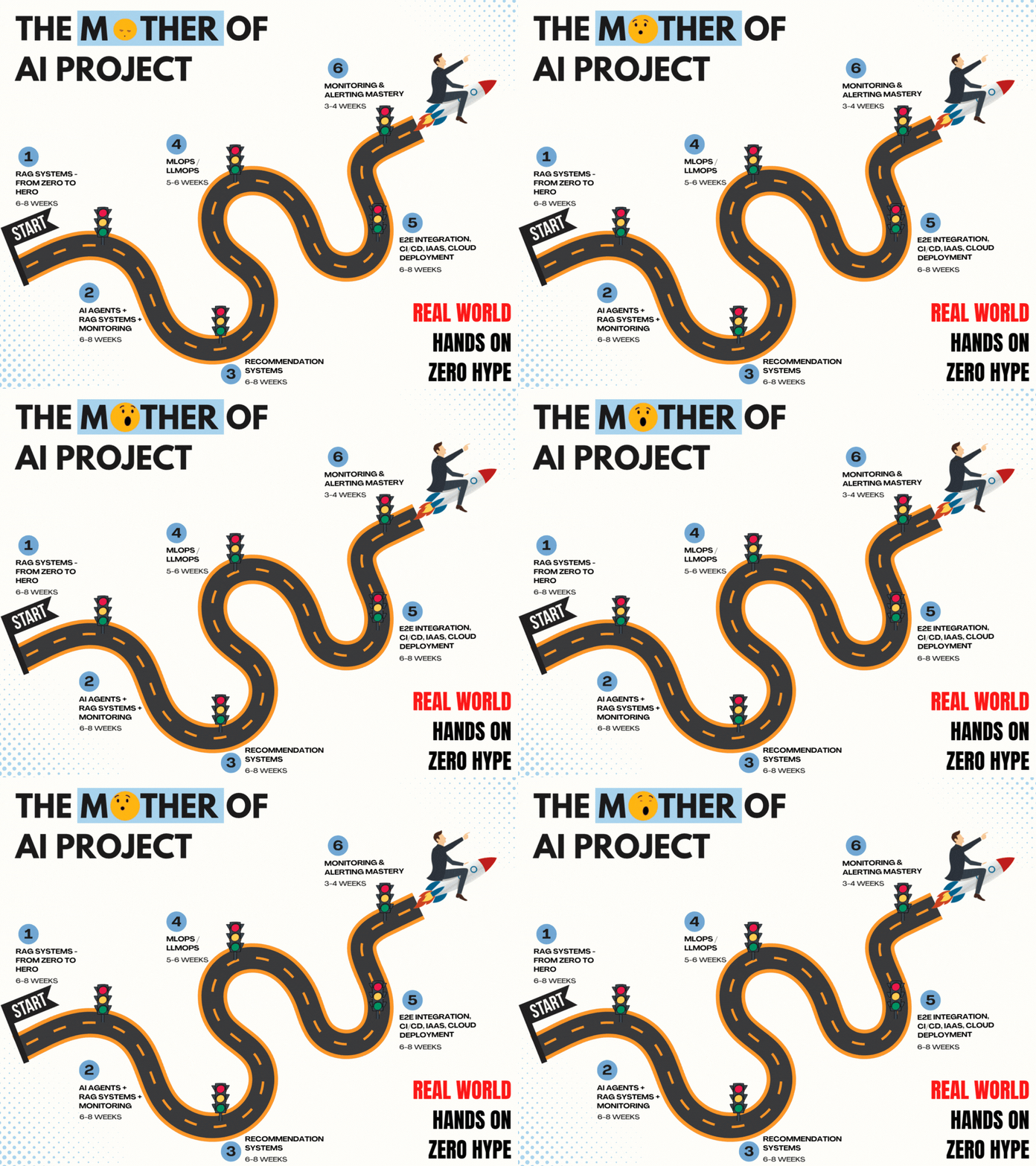
The Project Phases
- Phase 1: RAG Systems: Zero to Hero
- Phase 2: Ai Agents + Tool Use + Monitoring
- Phase 3: Recommendation system
- Phase 4: MLOps + LLMOps
- Phase 5: Ful App Integration + Cloud Deployment
- Phase 6: Monitoring + Alerting Mastery
Phase 1: Build Your Own AI Research Assistant
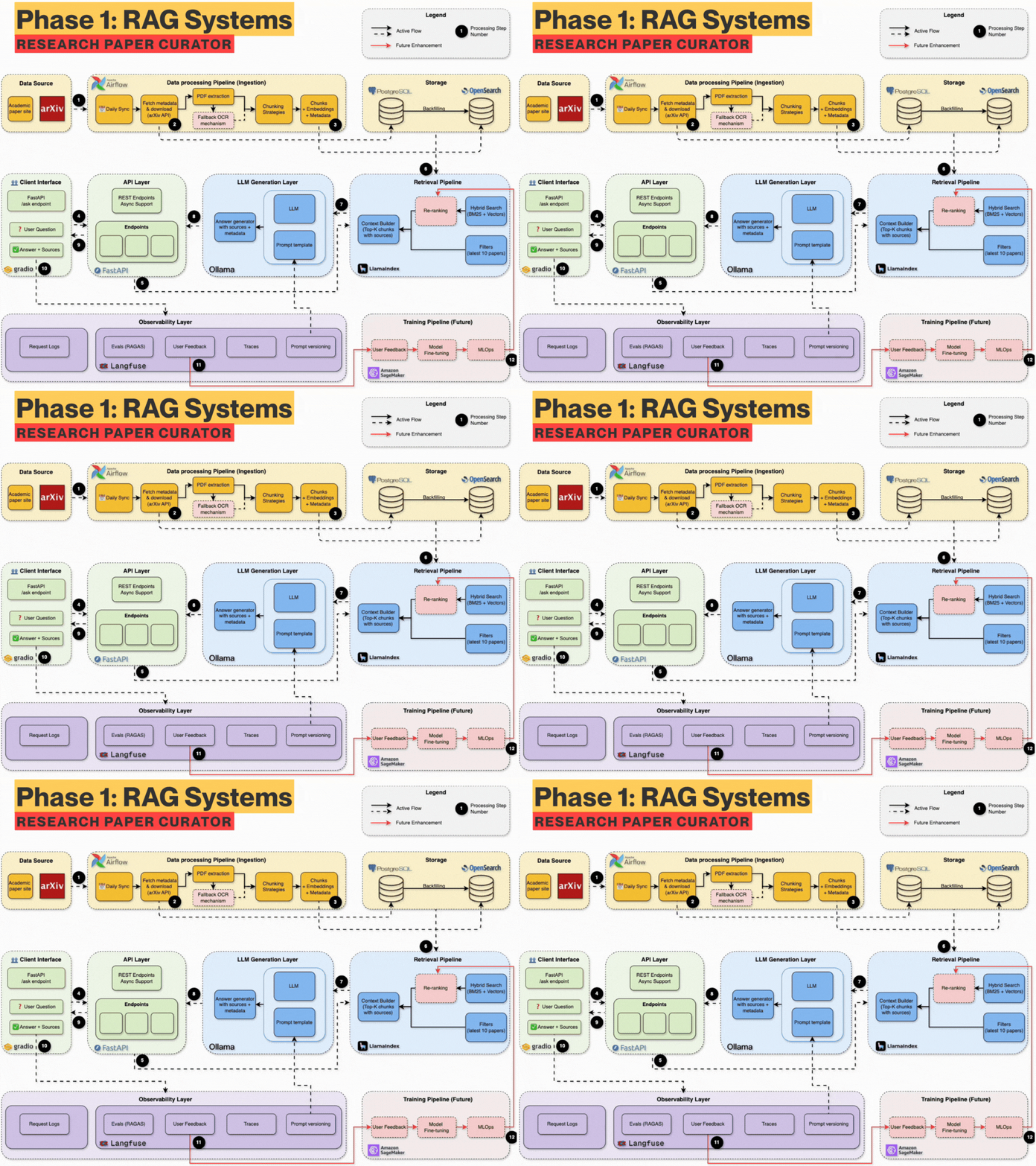
The 6-Week Learning Plan
- Week 1: Infrastructure & API setup
- Week 3: Ingestion Pipeline
- Week 3: Search infrastructure
- Week 4: Chunking + retrieval evaluation
- Week 5: Full RAG system + prompts
- Week 6: Observability + Versioning
Week 1: The Infrastructure That Powers RAG Systems
Substack link
The gap between AI tutorials and production reality isn't the algorithms - it's the infrastructure.
For production use case, we need to make sure our systems have:
- Robust Infrastructure - Services that don’t crash under load
- Clean Architecture - Code that teams can maintain and extend
- Observability - Monitoring that tells you what’s actually happening
- Automation - Pipelines that run without human intervent

Appendix
Git commands
Add the original repository as a remote, fetch tags, and create branches from them:
$ git remote add upstream https://github.com/jamwithai/arxiv-paper-curator.git 2>&1 || echo "Remote may already exist"$ git fetch upstream --tags
From https://github.com/jamwithai/arxiv-paper-curator
* [new branch] feature/deepseek-ocr-integration -> upstream/feature/deepseek-ocr-integration
* [new branch] main -> upstream/main
* [new tag] week1.0 -> week1.0
* [new tag] week2.0 -> week2.0
* [new tag] week3.0 -> week3.0
* [new tag] week4.0 -> week4.0
* [new tag] week5.0 -> week5.0
* [new tag] week6.0 -> week6.0
* [new tag] week7.0 -> week7.0Creating branches from each tag with the my-weekX.0 naming pattern:
$ cd /Users/user/Projects/llm_related/arxiv-paper-curator && git checkout -b

Switched to a new branch 'my-week1.0'
$ cd /Users/user/Projects/llm_related/arxiv-paper-curator && git checkout -b my-week2.0 week2.0
Switched to a new branch 'my-week2.0'Repeat the same for other weeks as well.
Switching back to main and verifying all branches were created:
$ git checkout main$ git branch -a | grep -E "(week)"
my-week1.0
my-week2.0
my-week3.0
my-week4.0
my-week5.0
my-week6.0Verifying tags are available:
$ git tag | grep -E "^week[0-9]"

  my-week1.0
  my-week2.0
  my-week3.0
  my-week4.0
  my-week5.0
  my-week6.0
  my-week7.0
Week 2 - Temporary Backup
.env
# Environment Configuration for arXiv Paper Curator
# Copy this file to .env and adjust values as needed

# Application Settings
APP_VERSION=0.1.0
DEBUG=true
ENVIRONMENT=development
SERVICE_NAME=rag-api

# PostgreSQL Database Configuration
POSTGRES_DATABASE_URL=postgresql://rag_user:rag_password@localhost:5432/rag_db
POSTGRES_ECHO_SQL=false
POSTGRES_POOL_SIZE=20
POSTGRES_MAX_OVERFLOW=0

# OpenSearch Configuration
OPENSEARCH_HOST=http://localhost:9200

# Ollama LLM Configuration
OLLAMA_HOST=http://localhost:11434
OLLAMA_MODELS=llama3.2:1b
OLLAMA_DEFAULT_MODEL=llama3.2:1b
OLLAMA_TIMEOUT=300

# arXiv API Configuration
ARXIV__BASE_URL=https://export.arxiv.org/api/query
ARXIV__PDF_CACHE_DIR=./data/arxiv_pdfs
ARXIV__RATE_LIMIT_DELAY=3.0
ARXIV__TIMEOUT_SECONDS=30
ARXIV__MAX_RESULTS=100
ARXIV__SEARCH_CATEGORY=cs.AI

# PDF Parser Configuration (Week 2)
# Limit pages to prevent memory issues with large papers
PDF_PARSER__MAX_PAGES=20
PDF_PARSER__MAX_FILE_SIZE_MB=20
PDF_PARSER__DO_OCR=false  # OCR is very slow, disable for speed
PDF_PARSER__DO_TABLE_STRUCTURE=true
airflow/Dockerfile
FROM python:3.12-slim

# Set environment variables
ENV AIRFLOW_HOME=/opt/airflow
ENV AIRFLOW_VERSION=2.10.3
ENV PYTHON_VERSION=3.12
ENV CONSTRAINT_URL="https://raw.githubusercontent.com/apache/airflow/constraints-${AIRFLOW_VERSION}/constraints-${PYTHON_VERSION}.txt"

# Install system dependencies
RUN apt-get update && \
    apt-get install -y --no-install-recommends \
        build-essential \
        curl \
        git \
        libpq-dev \
        poppler-utils \
        tesseract-ocr \
        libgl1 \
        libglib2.0-0 \
        libgomp1 \
        && rm -rf /var/lib/apt/lists/*

# Create airflow user with UID/GID 50000 for cross-platform compatibility
RUN groupadd -r -g 50000 airflow && useradd -r -u 50000 -g airflow -d ${AIRFLOW_HOME} -s /bin/bash airflow

# Create airflow directories with proper ownership
RUN mkdir -p ${AIRFLOW_HOME} && \
    mkdir -p ${AIRFLOW_HOME}/dags && \
    mkdir -p ${AIRFLOW_HOME}/logs && \
    mkdir -p ${AIRFLOW_HOME}/plugins && \
    chown -R 50000:50000 ${AIRFLOW_HOME} && \
    chmod -R 755 ${AIRFLOW_HOME}

# Install Airflow with PostgreSQL support
RUN pip install --no-cache-dir \
    "apache-airflow[postgres]==${AIRFLOW_VERSION}" \
    --constraint "${CONSTRAINT_URL}" \
    psycopg2-binary

# Copy requirements and install project dependencies
COPY requirements-airflow.txt /tmp/requirements-airflow.txt
RUN pip install --no-cache-dir -r /tmp/requirements-airflow.txt

# Copy and set up entrypoint script
COPY entrypoint.sh /entrypoint.sh
RUN chmod +x /entrypoint.sh

# Switch to airflow user and set working directory
USER airflow
WORKDIR ${AIRFLOW_HOME}

# Expose port
EXPOSE 8080

CMD ["/entrypoint.sh"]
src/config.py
from typing import Any, Dict, List, Union

from pydantic import Field, field_validator, model_validator
from pydantic_settings import BaseSettings, SettingsConfigDict


class DefaultSettings(BaseSettings):
    model_config = SettingsConfigDict(
        env_file=".env",
        extra="ignore",
        frozen=True,
        env_nested_delimiter="__",
    )

    @model_validator(mode="before")
    @classmethod
    def strip_inline_comments(cls, values: Any) -> Any:
        """Strip inline comments from environment variable values."""
        if isinstance(values, dict):
            cleaned = {}
            for key, value in values.items():
                if isinstance(value, str) and "#" in value:
                    # Strip inline comments (anything after #)
                    cleaned[key] = value.split("#")[0].strip()
                else:
                    cleaned[key] = value
            return cleaned
        return values


class ArxivSettings(DefaultSettings):
    """arXiv API client settings."""

    base_url: str = "https://export.arxiv.org/api/query"
    namespaces: dict = Field(
        default={
            "atom": "http://www.w3.org/2005/Atom",
            "opensearch": "http://a9.com/-/spec/opensearch/1.1/",
            "arxiv": "http://arxiv.org/schemas/atom",
        }
    )
    pdf_cache_dir: str = "./data/arxiv_pdfs"
    rate_limit_delay: float = 3.0  # seconds between requests
    timeout_seconds: int = 30
    max_results: int = 100
    search_category: str = "cs.AI"  # Default category to search


class PDFParserSettings(DefaultSettings):
    """PDF parser service settings."""

    max_pages: int = 30
    max_file_size_mb: int = 20
    do_ocr: bool = False
    do_table_structure: bool = True


class Settings(DefaultSettings):
    """Application settings."""

    app_version: str = "0.1.0"
    debug: bool = True
    environment: str = "development"
    service_name: str = "rag-api"

    # PostgreSQL configuration
    postgres_database_url: str = "postgresql://rag_user:rag_password@localhost:5432/rag_db"
    postgres_echo_sql: bool = False
    postgres_pool_size: int = 20
    postgres_max_overflow: int = 0

    # OpenSearch configuration
    opensearch_host: str = "http://localhost:9200"

    # Ollama configuration (used in Week 1 notebook)
    ollama_host: str = "http://localhost:11434"
    ollama_models: Union[str, List[str]] = Field(default="llama3.2:1b")
    ollama_default_model: str = "llama3.2:1b"
    ollama_timeout: int = 300  # 5 minutes for LLM operations

    # arXiv settings
    arxiv: ArxivSettings = Field(default_factory=ArxivSettings)

    # PDF parser settings
    pdf_parser: PDFParserSettings = Field(default_factory=PDFParserSettings)

    @field_validator("ollama_models", mode="before")
    @classmethod
    def parse_ollama_models(cls, v) -> List[str]:
        """Parse comma-separated string into list of models."""
        if isinstance(v, str):
            # Handle empty string case - return default
            if not v.strip():
                return ["llama3.2:1b"]
            return [model.strip() for model in v.split(",") if model.strip()]
        if isinstance(v, list):
            return v
        # Fallback to default
        return ["llama3.2:1b"]


def get_settings() -> Settings:
    """Get application settings."""
    return Settings()